If you're replacing a failed septic system or building on a tricky lot in British Columbia, you'll hear the words Type 1, Type 2 and Type 3. They come from BC's Sewerage System Regulation, and they describe one thing: how clean the water is when it leaves the treatment tanks and heads to the field.
The cleaner the water, the less work the soil has to do, and the more places a system is allowed to go.
What gets measured
- BOD5 (biochemical oxygen demand): the leftover "food" in the water. Bacteria use oxygen to break it down, and in a lake or river that oxygen comes from the water, which can harm fish.
- TSS (total suspended solids): the fine particles still floating in the water. They add to the oxygen demand and can clog a field.
- Oil and grease: unsightly, and it makes ground dispersal work less well.
- Ammonia: toxic to fish.
- Fecal coliform: bacteria that show how much disease risk is left. Type 3 has a limit for it.
Type 1: the septic tank
A Type 1 system is a septic tank. Solids sink to the bottom as sludge, grease floats to the top as scum, and some of the waste breaks down without oxygen. The tank's main job is separating solids from liquid. The real cleaning happens later, in the soil of the dispersal field.
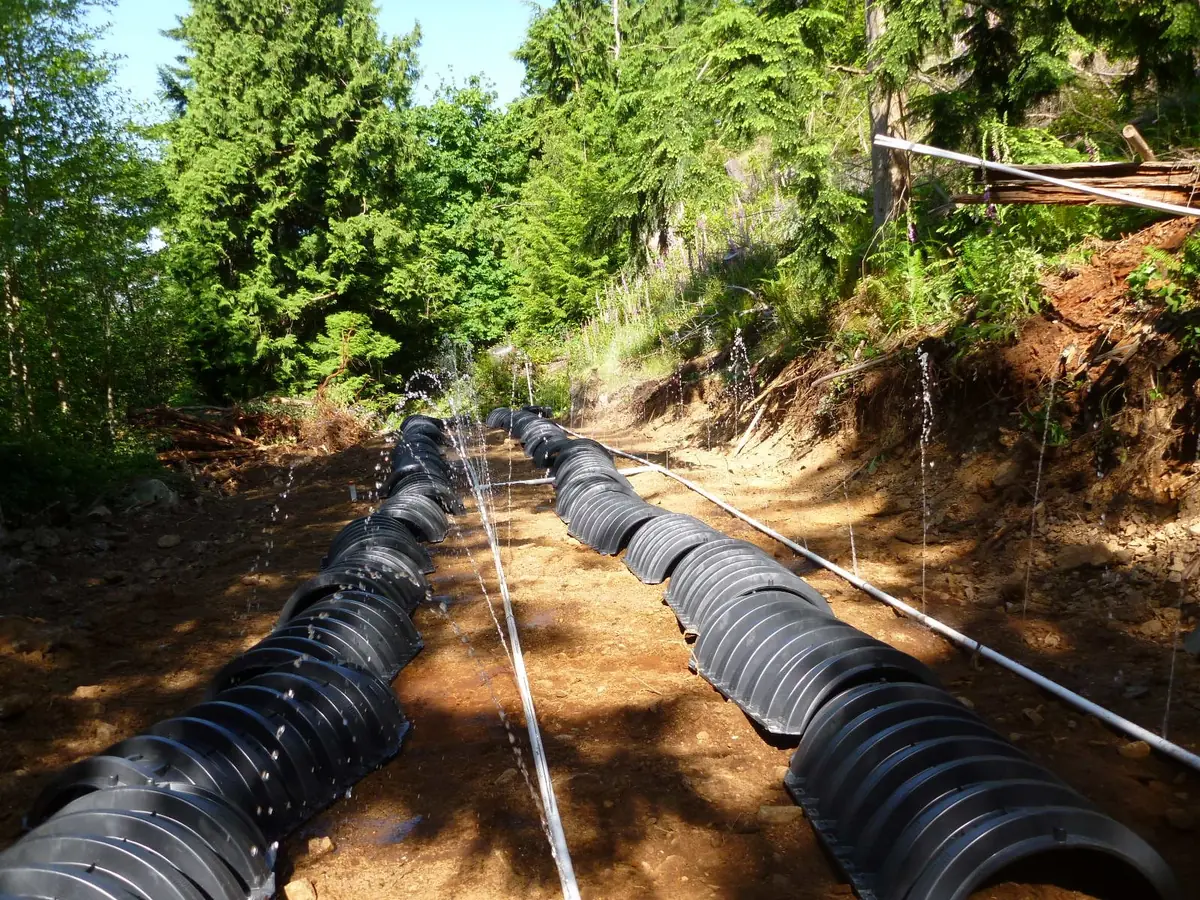
That's why a Type 1 system needs a large field in deep, good soil, with plenty of room away from wells, lakes and streams. There are no numeric limits on the water leaving the tank.
Type 2: add air
A Type 2 system adds a treatment step after the septic tank: a tank or chamber where air is bubbled through the water. With oxygen, a different set of bacteria breaks the waste down much faster. Type 2 water has to be under 45 mg/L for both BOD5 and TSS.
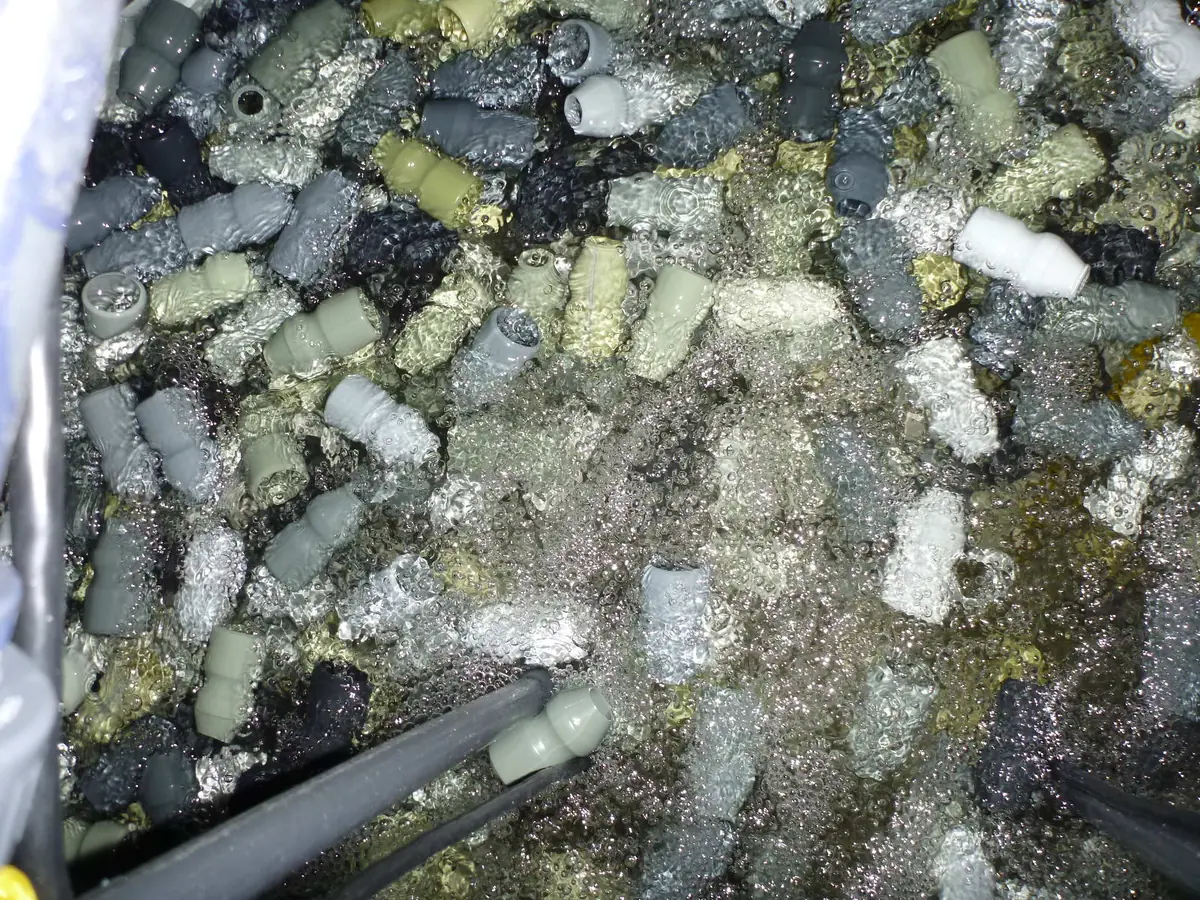
There are two ways to do it. In a "suspended growth" system the bacteria float in the water, kept moving by the bubbles. In an "attached growth" system they live on media, a large surface submerged in the bubbling water. Both can meet Type 2, but media systems are tougher: the bacteria stay put, so the system copes better with harsh cleaners, a houseful of guests, or a cabin that sits empty all winter.
Go Green's SC2 models are Type 2 media systems.
Type 3: the cleanest level in BC
A Type 3 system uses the same idea with more control over each stage, so the water comes out clear and nearly odourless. Type 3 water has to be under 10 mg/L for BOD5 and TSS, and the median fecal coliform count has to be under 400 CFU per 100 mL. Type 3 systems are designed for the specific site and need a professional engineer.
Go Green's SC3 models are Type 3 systems.
How clean is each Type?
Typical results, in milligrams per litre, from Go Green's product literature:
| Raw sewage | Type 1 | Type 2 | Type 3 | |
|---|---|---|---|---|
| BOD5 | 250 | 120 | 45 | 10 |
| TSS | 250 | 75 | 45 | 10 |
| Oil and grease | 25 | 5 | 2 | under 1 |
| Ammonia | 30 | 30 | 3 | under 1 |
Which one does your site need?
It depends on the site, not on preference. An Authorized Person looks at the soil, the slope, the lot size, and the distance to wells, water and property lines. A higher Type is usually needed when:
- the soil is clay, rock or very shallow
- an old field has failed and there's no room for a bigger one
- the lot is small or steep
- the house is close to a well, a lake, a creek or the ocean
Because the water is so much cleaner, a Go Green system can need up to 66% less dispersal field than a septic tank alone.
Where does the treated water go?
For homes, cabins and other buildings on land, treated water always goes into the ground through a field or sand filter. Only floating systems, such as float homes, floating lodges and floating camps, can discharge to the water. They follow a different standard from the BC Types: 45 mg/L or less for BOD and TSS, and effluent that isn't toxic to fish.
Watch how each Type works on our home page, or call us with your site details for a free consultation.