A Go Green system cleans wastewater the way nature does, only faster and in a smaller space. Bacteria do the cleaning, gravity moves the water from one chamber to the next, and no chemicals are added. Here's what happens along the way.
1. Solids removal
Everything from the house arrives in the first chamber. Heavy solids settle to the bottom and grease floats to the top, just like in a septic tank. The partly cleared water in the middle moves on.
2. Fermentation
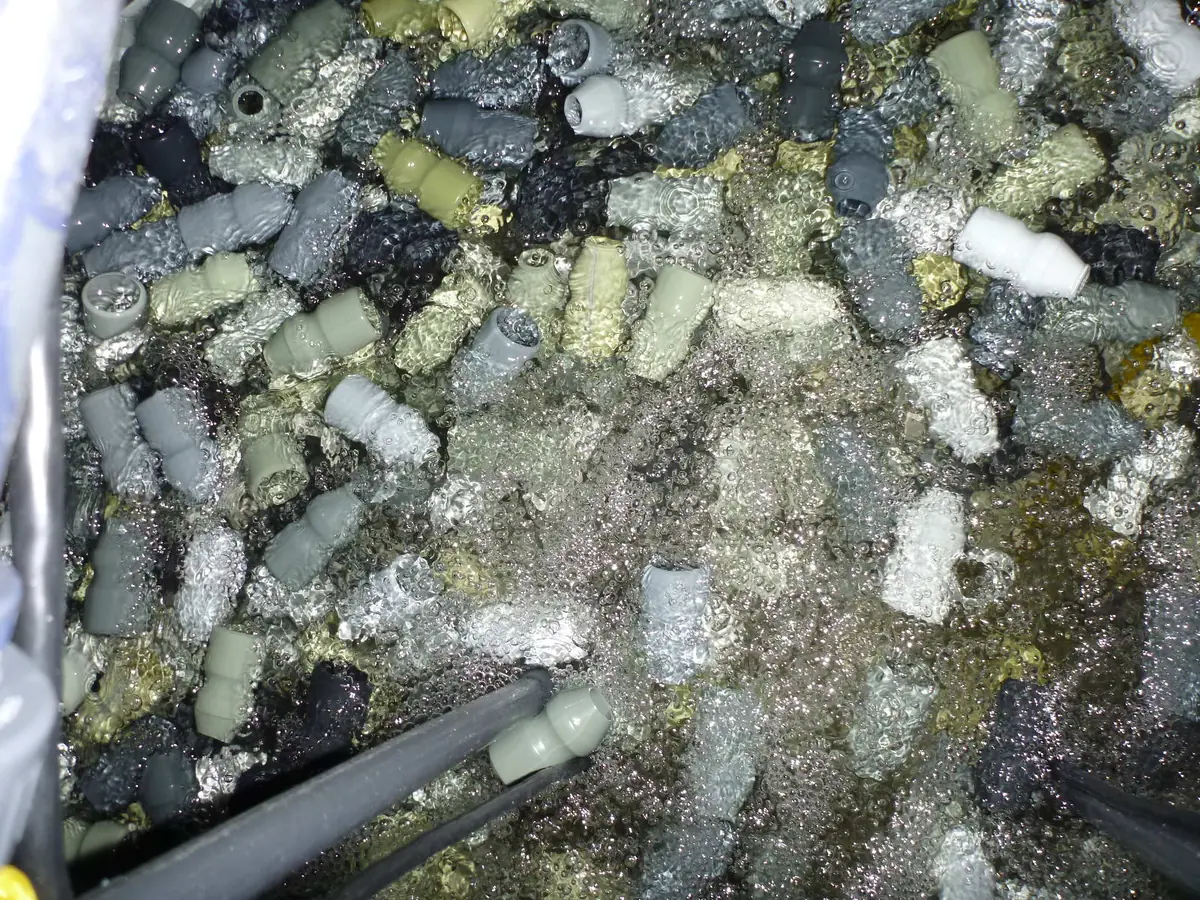
In the second chamber, bacteria that live without oxygen start breaking the waste down. They live on Go Green's media, a large surface for them to grow on, so they stay in the tank instead of washing out.
3. Aeration
A submerged aerator bubbles air through the third chamber. With oxygen, a second set of bacteria living on the media finishes most of the job. The aerator is the only moving part in the system. It sits under the water, so it's quiet, and it even adds a little warmth to the process.
4. Final clarifier
The last fine particles settle out of the treated water. An optional bio-filter can catch whatever remains, for the cleanest possible result.
5. To the field
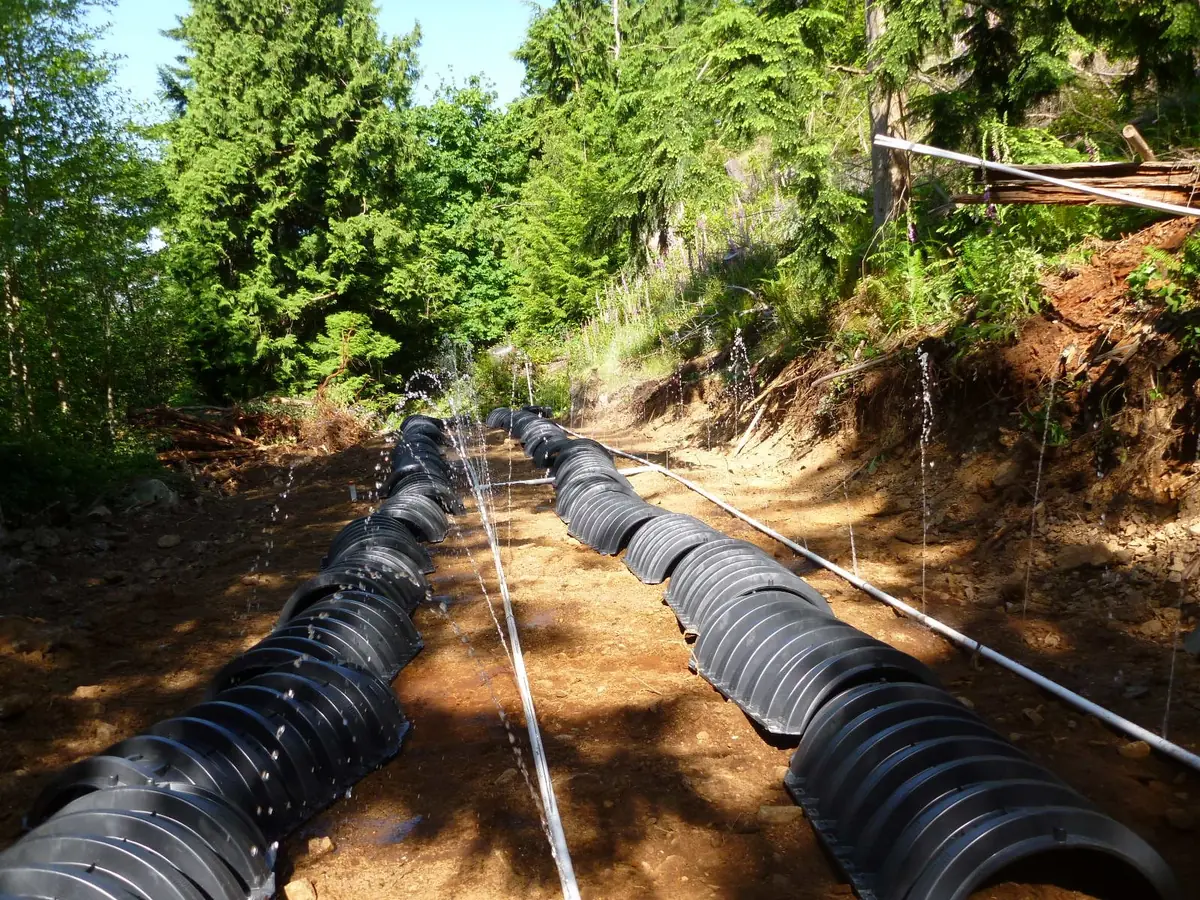
The clean water flows or is pumped to a dispersal field or sand filter. Because it's already so clean, the field can be much smaller than a septic field. Floating systems can discharge to the water when they meet the standard for floating systems.
Why the media matters
Older treatment tanks used fixed media that clogged as the bacteria grew, and broke apart when someone tried to take it out for service. Erling Kjerside designed Go Green's loose, floating media to work like fixed media without those problems: it doesn't clog, and it can be vacuumed out and put back without breaking.
Media also makes the system forgiving. The bacteria stay in place through a weekend full of guests, harsh cleaners going down the drain, or months at a seasonal cabin with no one home.
What it's built from
Systems come in polyethylene tanks, which are light enough to carry in by boat or barge and won't crack or corrode, or in precast concrete. Tanks sit below ground, or below the waterline on a float. The aerator uses so little power that remote sites can run it on a solar panel.
Looking after it
There's very little to do. Have the system checked as your service plan recommends, and tell your service provider before you add bedrooms or have long-term guests, so it can be checked for the extra load. Type 3 systems are designed and maintained under a professional engineer.
See the animated diagram, or read about the difference between Type 1, 2 and 3.